
QUICK QUOTE - BOOK YOUR RIDE
Paris is one of those cities that rewards anyone who takes the time to plan properly. Three days is enough to cover the landmarks, walk the neighbourhoods, eat well, and leave with a real sense of the place — provided you are not wasting hours figuring out transport or queuing for tickets you could have booked in advance. This guide gives you a practical, day-by-day itinerary covering the essential sights, the best local spots, and the most efficient way to move between them. Whether you are visiting for the first time or returning after years away, this is how to make three days in Paris count.
Paris is large, but its most rewarding areas are concentrated and walkable. Three days, planned well, are enough to experience the monuments, the museums, the markets, and the quieter neighbourhoods that most visitors miss. You will not see everything — no one does — but you will leave having seen the best of it, without the exhaustion of trying to rush through more than the city comfortably offers in a short visit.
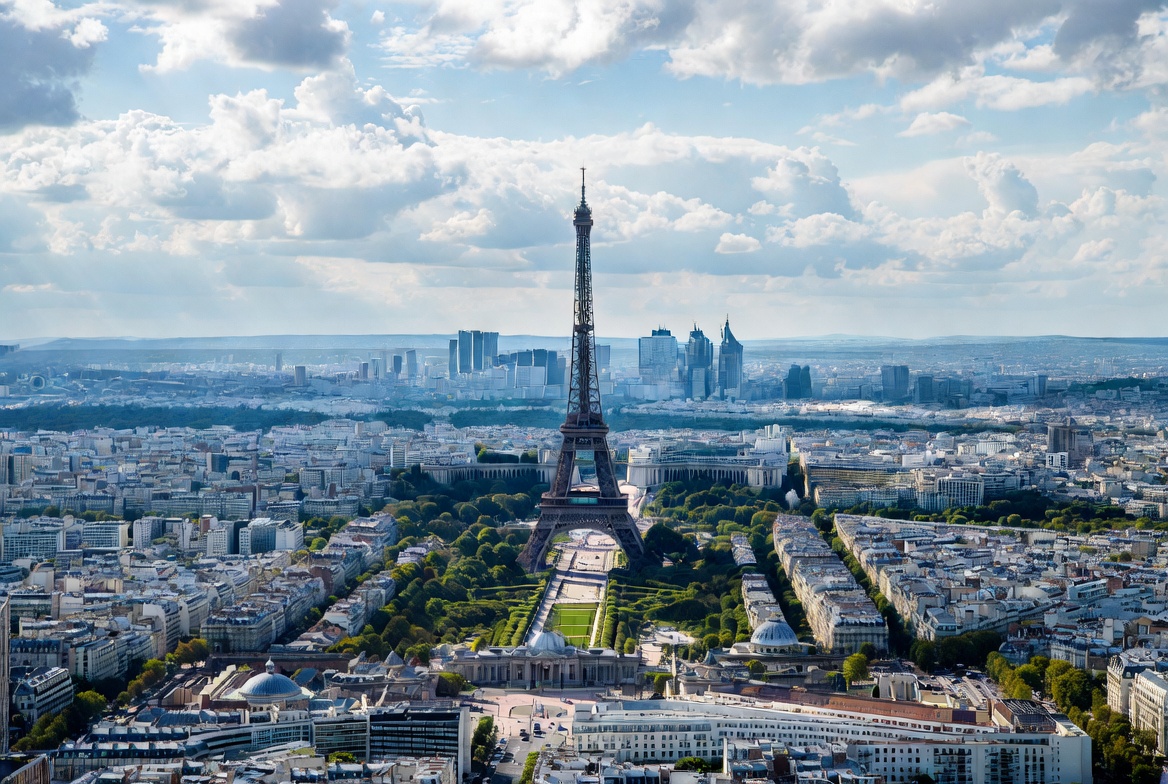
Start early. The Eiffel Tower is Paris's most visited landmark, and the crowds build quickly after 9 am. Arrive before 8:30 am for the clearest views and the shortest queues. Cross to the Trocadéro Gardens on the opposite bank of the Seine for the best photographs of the tower – this is the angle seen in most postcards, and for good reason.
Local tip: Book your ticket online at least a few days in advance. Tickets sell out, particularly in summer and during school holidays. If you are arriving from the airport that morning, a private transfer directly to the 7th arrondissement with a Paris Chauffeur Service means you can drop your bags at the hotel and be at the tower before the crowds gather — no metro connections with luggage, no wasted time.
After the tower, take a cruise along the Seine. Most departures leave from the Pont d'Iéna near the Eiffel Tower and pass Notre-Dame, the Musée d'Orsay, the Pont Neuf, and the Pont Alexandre III. The journey takes around an hour and gives you a completely different perspective on the city's architecture. After disembarking, head to one of the brasseries near the Quai Voltaire for a proper sit-down lunch before the afternoon museums.
Both are within walking distance of the Seine, and both require at least two hours to do properly. Choose one for the afternoon:
Book tickets online for both. Walk-up queues at the Louvre in particular can be extremely long.
Walk the length of the Champs-Élysées as the evening light changes, then climb to the top of the Arc de Triomphe for a panoramic view of Paris at dusk. The rooftop is open late, and the view across the twelve radiating avenues is one of the most impressive in the city.
Dinner: Step off the Champs-Élysées into the side streets of the 8th arrondissement for dinner. The main boulevard is overpriced and aimed at tourists — one street back, you will find proper Parisian bistros. Order duck confit, a good Bordeaux, and crème brûlée. This is what the evening should feel like.
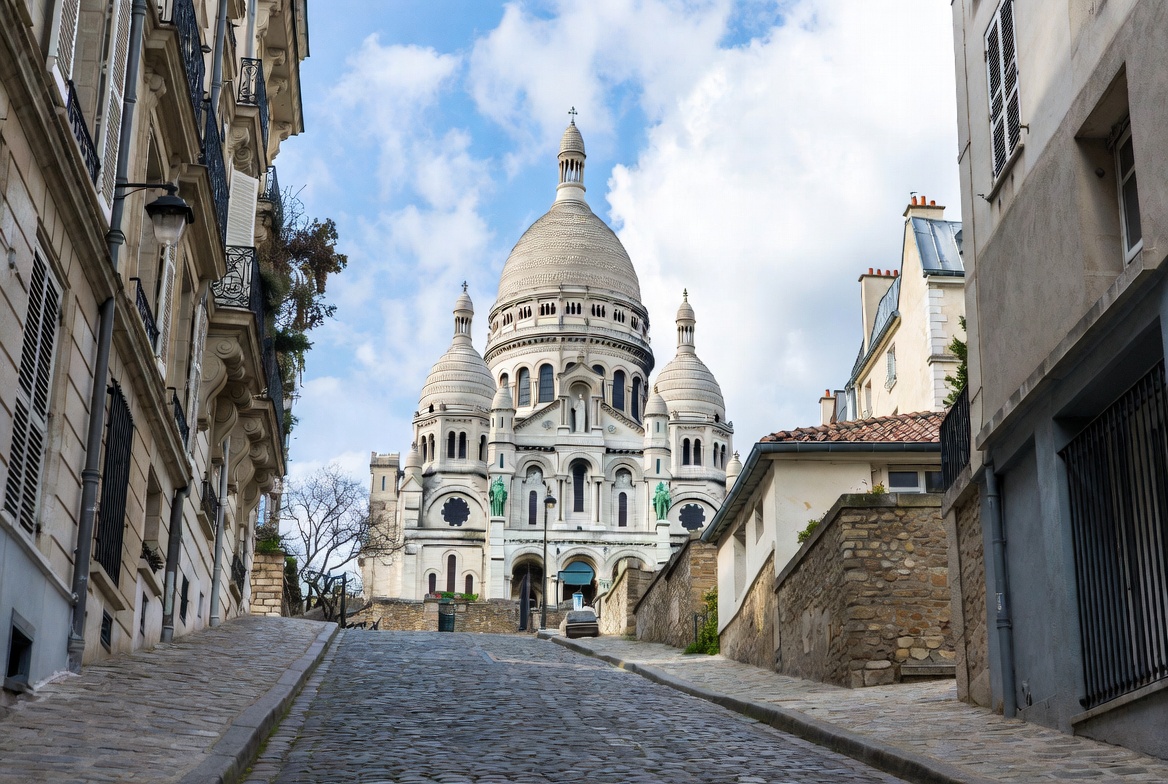
Begin day two in Montmartre, the hilltop neighbourhood that defined 19th-century Parisian bohemian life and attracted artists including Picasso, Toulouse-Lautrec, and Renoir. The cobbled streets and village atmosphere are unlike anywhere else in Paris. Walk up to the Sacré-Cœur Basilica for a wide view across the city, then spend time in the streets below.
Don't miss:
Head south to the Latin Quarter, one of Paris's oldest districts, built around the Sorbonne University. The streets are narrow, the bookshops are excellent — particularly Shakespeare and Company on the Seine bank — and the food options are better value than in the tourist-heavy areas. Stop at Notre-Dame Cathedral. Restoration following the 2019 fire is now complete, and the cathedral reopened in December 2024. It is worth visiting inside as well as out — the interior is extraordinary.
Lunch: A crêpe from a street stall, or a seat at one of the Latin Quarter bistros. Avoid the restaurants directly facing Notre-Dame — the food quality drops and the prices rise the closer you get to the square.
The Luxembourg Gardens are one of the best places in Paris to spend a slow afternoon. Hire a chair near the central fountain, watch Parisians read and play pétanque, and let the pace drop after two days of museums and monuments. From the gardens, walk ten minutes to the Panthéon — France's national mausoleum, where Voltaire, Rousseau, Victor Hugo, and Marie Curie are buried. The building is remarkable, and the crypt is open to visitors.
Spend the evening in Saint-Germain-des-Prés, the Left Bank neighbourhood that became the intellectual centre of post-war Paris. Les Deux Magots and Café de Flore on Boulevard Saint-Germain are the famous literary cafés where Sartre, de Beauvoir, and Hemingway spent their afternoons — they are expensive but worth one coffee for the setting. For dinner, move one street back into the quieter residential streets of the 6th arrondissement, where you will find better food at fairer prices.
Le Marais is one of the most interesting districts in Paris — Jewish heritage, contemporary art galleries, independent boutiques, and some of the city's best street food all exist within a few blocks of each other. Start at Place des Vosges, Paris's oldest planned square, built in 1612. Walk through the arcaded galleries, then visit either the Musée Picasso or the Musée Carnavalet (Paris's history museum, and free to enter).
Breakfast: L'As du Fallafel on Rue des Rosiers is one of the most famous falafel spots in Paris and opens early. Alternatively, any of the patisseries on the surrounding streets will have excellent croissants and coffee.
Based on your interests, the middle of the day works well for one of two options:
For a less touristy final afternoon, choose one of these:
If you are moving between these areas with luggage before heading to the airport, a Paris Taxi Service can collect from your hotel, make a final stop, and take you directly to CDG or Orly — fixed fare, no meter, no stress on the last day.
For a final evening, two options work well. A dinner cruise on the Seine gives you a slow, candlelit view of Paris at night — Notre-Dame, the Pont Alexandre III, the illuminated bridges — with food served on board. Book in advance. Alternatively, return to the Eiffel Tower after dark. Every hour, every hour from dusk until midnight, the tower lights up with a full sparkling light display that lasts five minutes. Standing at Trocadéro for this is one of the best free experiences Paris offers, and the right way to close three days in the city.
The Paris metro is fast, inexpensive, and covers all the areas in this itinerary. A Paris Visite Pass gives unlimited travel across metro, bus, RER, and tram lines — available for 1, 2, 3, or 5 consecutive days and worth buying if you are moving around frequently.
For airport arrivals and departures, or for moving between areas with luggage, a private transfer is more practical than the metro. Airport transfers in Paris operate fixed-fare private transfers from both CDG and Orly airports to any address in Paris — meet and greet at arrivals, direct to your hotel, no connections. Fares start from €65 from CDG and €80 from Orly, confirmed at the time of booking with no additional charges.
For a three-day visit, staying central saves significant time. The best areas:
Book at least six to eight weeks ahead if travelling in summer or during French school holidays. Hotels in central Paris fill quickly, and prices rise sharply with late bookings.
Three days in Paris is not a long time, but it is enough to understand why the city holds the place it does. The monuments are as good as advertised. The food, the cafés, and the neighbourhoods are better than most people expect. If you plan carefully, book in advance, and move efficiently between areas, you will leave having seen the best of it — and with a clear idea of what you want to come back for.
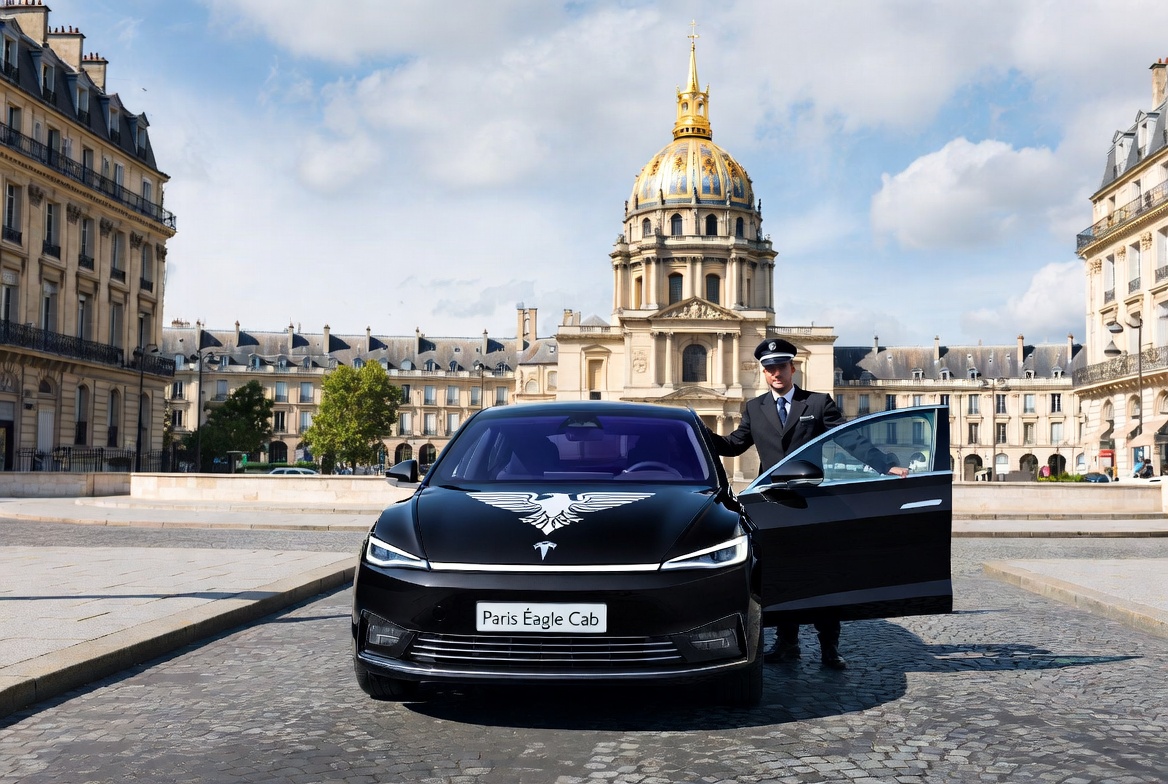
Start your trip the right way. Book your private transfer from CDG or Orly Airport with Paris Eagle Cab and arrive in Paris without the usual airport-to-hotel hassle. Your chauffeur tracks your flight, meets you at arrivals, and takes you directly to your hotel. From there, the city is yours.
The Countdown Is On - Now What? The trip is booked. The kids have known for weeks....
view detailThe Part Nobody Plans For Everyone books the rides. Everyone looks up where to eat....
view detail"Imagine waking up in Paris — and by lunch, standing under Sleeping...
view detail